Treaty-port history · Liwan
Shamian Island Guangzhou walking guide
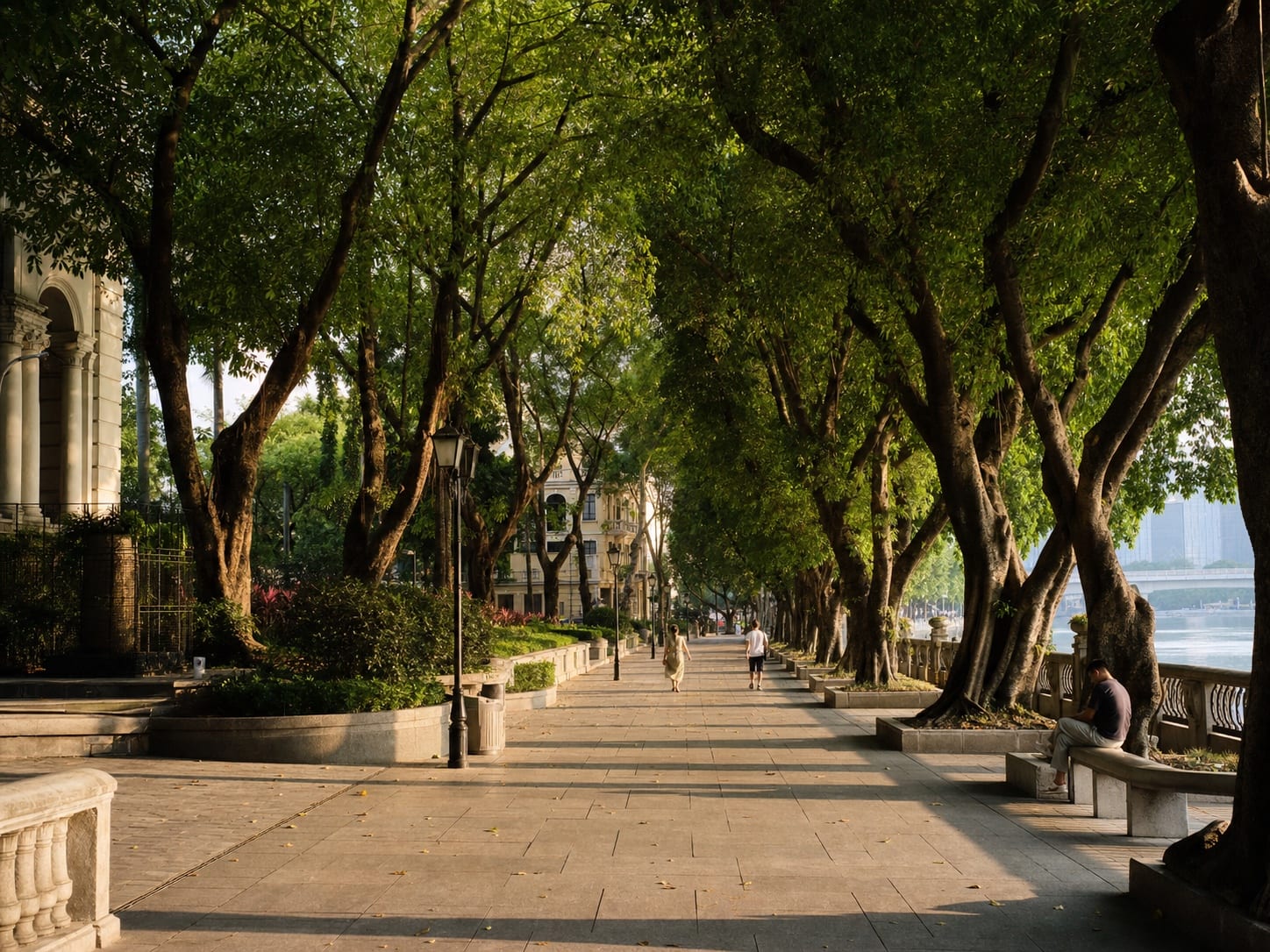
Shamian is an easy shaded walk beside the Pearl River, but the calm streets came out of a coercive treaty-port history. Read the buildings and the old embankment together, then leave time for the river edge.
Content updated 7 August 2026
Facts to check first
Plan the visit
- Admission
- Free public streetsIndividual buildings may be private, working venues or separately managed.
- Opening
- Outdoor streets open all dayDaylight is best for architecture; late afternoon is comfortable for the river edge.
- Getting there
- Huangsha or Cultural Park Metro stationsChoose the station that matches the end where you want to begin.
- Allow
- 90 minutes to 3 hoursA compact circuit is short. Add time for plaques, the embankment and a nearby meal.
01
Why visit Shamian Island
Shamian was part of Guangzhou's trading and defensive waterfront before Britain and France forced the Qing government to designate it as a concession in 1859. A canal was cut along the north side, turning the area into an island; China formally recovered it in 1946.
The surviving avenues, gardens, public buildings and waterfront works make that period unusually legible. Their beauty is real, and so is the unequal political system that produced the district. A useful visit keeps both in view.
02
How to visit
- 01
Walk one central avenue first. Read the plaques and compare the scale, setbacks and gardens of several buildings rather than collecting every façade.
- 02
Turn to the north channel to understand how the island was separated, then cross to the south embankment for the wider Pearl River view.
- 03
Leave toward Xidi or a nearby meal. If you have already spent a long morning in Xiguan, do not add another distant evening attraction.
What fits nearby
- 01
Xidi and the Customs House riverfront for Guangzhou's port-city history
- 02
Yongqing Fang and Enning Road for lived-in Xiguan streets
Read the ground
A short history of Shamian Island
The concession did not begin on empty land. The river edge already served trade and defence, with earlier landing places and military works. The nineteenth-century transformation cut a channel, rebuilt embankments and imposed a planned enclave beside the Chinese city.
The old stone embankment and landing steps are quieter evidence than the grand façades. They show how boats, goods and people reached the island, and how engineering helped create the boundary that defined it.
Walk slowly
How to look at Shamian's architecture
Look for the relationship between buildings and open space. Setbacks, gardens and broad avenues differ sharply from the denser lanes nearby in Liwan. That contrast tells you as much as any single architectural style.
Do not rush to label every façade European. The island contains buildings from different periods, institutions and later adaptations. Plaques help, and uncertainty is better than assigning a style from one arch or column.
FAQ
Frequently asked questions
Is Shamian Island free?
Yes. The public streets and river edges are free to walk. Individual buildings and businesses set their own access rules.
How long does it take to walk Shamian?
A basic circuit takes about 60 to 90 minutes. Allow two to three hours if you read plaques, explore both river edges and stop for food.
Which Metro station is closest to Shamian?
Huangsha and Cultural Park are both practical. Huangsha suits the west side; Cultural Park is useful when approaching from Xidi and the east.
What is the history of Shamian Island?
It was part of Guangzhou's trading and defensive waterfront. Britain and France forced its designation as a concession in 1859, and China formally recovered it in 1946.
What should I combine with Shamian?
Xidi, the Customs House riverfront and nearby parts of Liwan fit together best. Keep the day west of the city centre rather than adding Canton Tower.
Plan with Joey, a Guangdong local
How does this fit into your Guangzhou trip?
I can work this visit into a day with your hotel journeys, nearby meals and enough time to look around. Tell me what else you want to see and how much walking suits you.
Paid planning from US$50 · Submit a brief without paying
Plan my Guangzhou tripSee a complete sample planPrice, delivery date and revisions agreed before paid work begins.