A trading city best read by district

Guangzhou travel guide

Guangzhou makes the strongest first base in Guangdong because food, old-city history and present-day urban life are all legible without leaving the city. The mistake is trying to cross it for every famous pin.

The short answer

Stay three days. Use one day for Xiguan and Liwan, one for Yuexiu and the old-city axis, and one for either the modern riverfront or a nature chapter. Eat morning tea early in the trip so you understand the city’s pace before building the rest of the schedule.

Shaded qilou arcades and street life on Enning Road
The lived-in city continues beyond the polished lanes · Enning RoadPhoto: LocalGuang editorial archive · Project-owned editorial asset

Ideal first stay

3 full days

Best first area

Liwan and Xiguan

Best base for old city

Yuexiu or Liwan

One useful rule

Plan by district, not attraction rank

01

Why Guangzhou

Food is the rhythm; trade is the long story

A morning can begin with tea and baskets in a busy dining room, then move into Xiguan’s clan halls, arcades and waterways without forcing a cross-city transfer. The city rewards this kind of continuity.

Guangzhou’s history is not confined to one preserved quarter. Archaeology around the old city, modern trading streets, former concession architecture on Shamian and the new river axis all reveal different systems that built the city.

The most useful way to read Guangzhou is west to east in ideas, not necessarily in one day. Liwan and Xiguan reveal clan institutions, craft, arcades, waterways and the social pace of morning tea. Yuexiu carries the longer archaeological and administrative city. The Pearl River’s newer axis then shows museums, civic space and high-rise Guangzhou representing itself at metropolitan scale.

Food is not a separate evening category. It determines when the day starts, how many people make a meal workable and which district should carry lunch. Morning tea belongs before a Liwan or Yuexiu walk. Wonton noodles, rice rolls and congee suit lighter old-city transitions. Roast meats can make a compact lunch. A large seafood or regional dinner needs a group and recovery room.

The city’s scale is the main planning friction. Liwan, Yuexiu, Tianhe, Haizhu, Baiyun and Panyu are not adjoining attraction rooms. Metro coverage is extensive, but a cross-city ride still includes walking through stations, finding exits and reaching a specific entrance. A three-day route becomes comfortable when two major stops share a district and the evening remains on the same side of the river.

Guangzhou also works because it offers weather alternatives. Museums, clan halls, covered arcades and tea houses can absorb a wet or very hot half-day; parks, wetlands and the riverfront can move when conditions improve. This flexibility is valuable at the beginning of a province-wide trip, when jet lag and weather have not yet revealed the group’s actual pace.

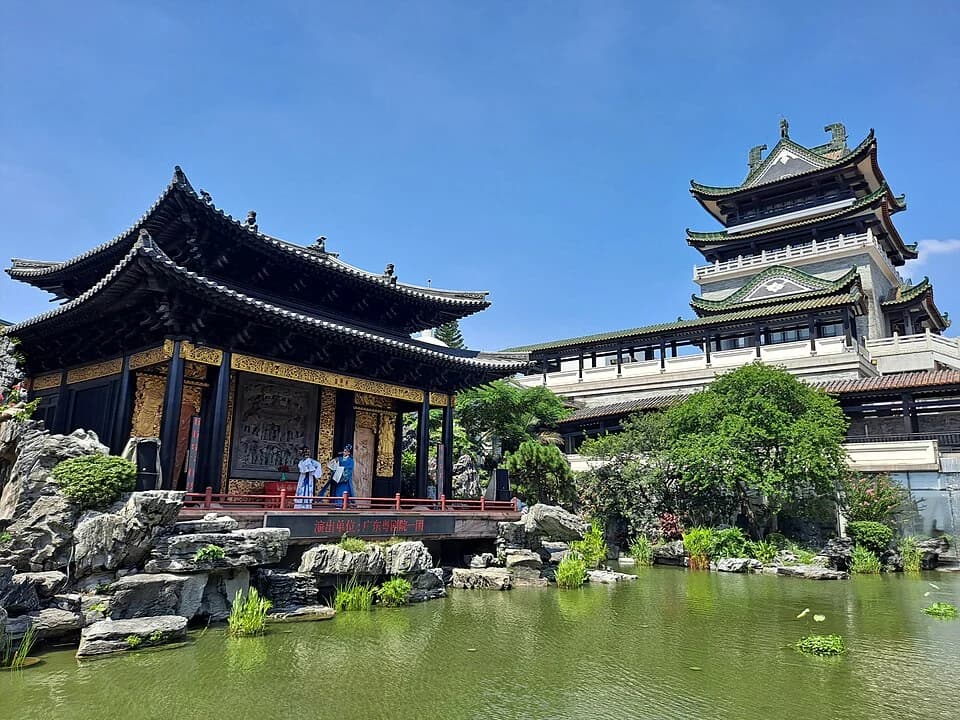
Cantonese Opera Art Museum garden in Liwan
Xiguan combines performance history, craft and lived streetsPhoto: 钉钉 · CC BY-SA 4.0
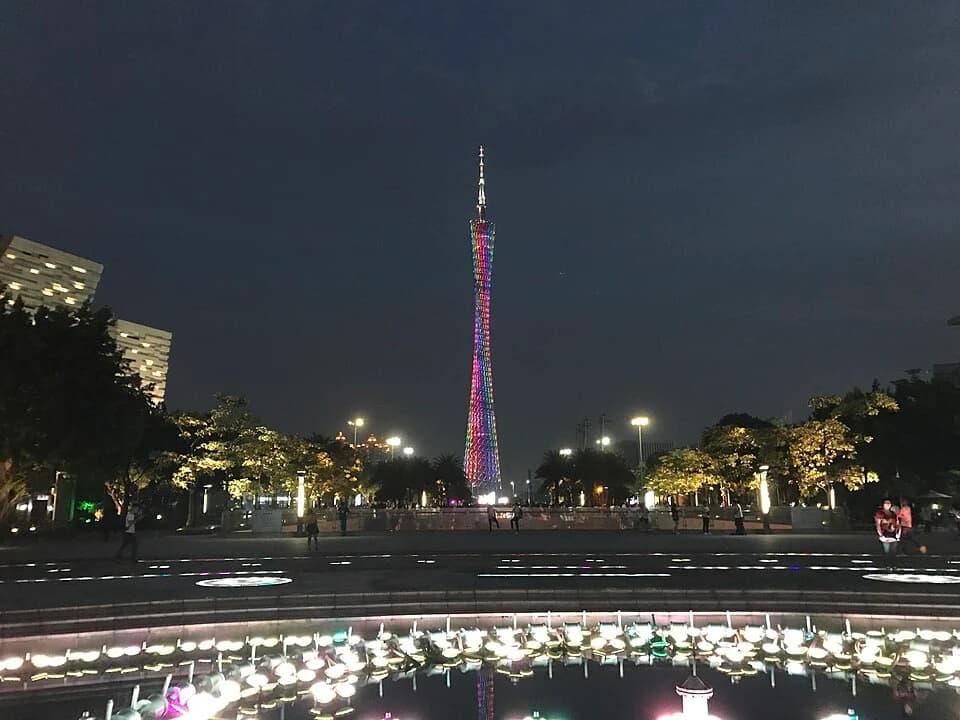
Huacheng Square and Canton Tower at night
The new river axis is another Guangzhou, not the whole cityPhoto: そらみみ · CC BY-SA 4.0
02

Top experiences

Six places, grouped into workable days

Chen Clan Ancestral Hall

A compact lesson in Lingnan building craft, with courtyards, carved surfaces and animated ceramic rooflines.

  • Pair with: early tea, Enning Road or Yongqing Fang
  • Notice: wood, stone, brick, pottery and plaster decoration across the complex
  • Check: current reservation, admission and opening before travel
Courtyard and carved halls at Chen Clan Ancestral Hall
Photo: Shujianyang · CC BY-SA 4.0

Yongqing Fang and Enning Road

Restored courtyards and lived-in arcades are most useful together; leave the polished core and continue along Enning Road.

  • Route: use restored lanes as the start, then continue into ordinary Enning Road
  • Meal: keep lunch light; the district supports noodles, congee and sweets
  • Avoid: treating one polished courtyard as the whole of Xiguan
Qilou arcades on Enning Road
Photo: LocalGuang editorial archive · Project-owned editorial asset

Shamian Island

Tree-shaded streets and former concession buildings preserve a visible - and unequal - chapter of modern trading history.

  • Pair with: riverside walking or a Liwan day, not a Tianhe sprint
  • Read it as: a trading-history landscape with unequal colonial relationships
  • Pace: shade helps, but humidity and photography can extend the visit
Tree-lined historic street on Shamian Island
Photo: LocalGuang editorial archive · Project-owned editorial asset

Nanyue King Museum

Use one museum visit to anchor the old city’s much longer timeline; do not stack it with every nearby institution.

  • Choose: one venue and confirm its exact address; the institution has distinct sites
  • Pair with: one Yuexiu park, memorial or Beijing Road chapter
  • Check: reservation and live visitor information before leaving the hotel
Nanyue King Museum exterior
Photo: Shujianyang · CC BY-SA 4.0

Canton Tower and the river axis

The value is the relationship between tower, river, civic buildings and the new axis - not only the observation deck.

  • Best time: late afternoon into evening for changing light
  • Choose: riverfront relationship, public space or paid tower experience
  • Avoid: crossing the city only for a photograph when the weather is poor
Canton Tower illuminated at night
Photo: Tim Wu · CC BY-SA 4.0

Baiyun Mountain

A genuine nature break inside the metropolis. Choose a route, allow for heat and avoid attaching it to an already full old-city day.

  • Make it: a half or full nature day with one chosen route
  • Carry: water and protection for heat or rain
  • Check: current scenic-area transport and access; do not rely on an old route post
Green ridges at Baiyun Mountain
Photo: Shujianyang · CC BY 4.0
03

Where to stay

Choose the district that matches two of your three days

Liwan is the most atmospheric base for a food and Xiguan-led first visit, but the exact station matters. A beautiful hotel deep inside a lane may create a long luggage walk; a room beside the wrong line can add a transfer to every other day. Test the route to Chen Clan Hall, Yuexiu and the departure station before booking, then judge the neighbourhood character.

Yuexiu is the flexible old-city compromise. It supports the Nanyue King Museum, Yuexiu Park, Beijing Road and broad transport options, yet it is a large district rather than one compact centre. A hotel near one edge can still be far from the attraction implied by the label. Use walking distance to a specific station and a morning breakfast option as the final filters.

Tianhe and the new axis suit business access, newer hotels, some rail connections and travellers who want contemporary Guangzhou at the door. They are weaker for spontaneous old-city mornings. Haizhu can work for the river, Canton Tower and selected creative areas, but convenience varies dramatically. Do not choose either simply because a map marks it as central; choose it because two planned days use that side.

AreaBest forTrade-off
LiwanXiguan, food and old neighbourhood walksLonger to some modern-axis stops
YuexiuCentral old-city access and broad transport choicesLarge district - check the exact station
TianheModern business city, rail access and newer hotelsLess immediate old-city atmosphere
HaizhuRiverfront, Canton Tower and selected design districtsConvenience varies sharply by station
04

What to eat

Build meals into the same district

For yum cha, arrive with enough time to understand the ordering system and eat in rounds. Two diners should begin with two or three baskets plus tea, then add a vegetable, congee or another texture after seeing the size. Four diners can compare more widely. The point is the changing table and conversation, not how many bamboo lids can appear in one photograph.

Old-city light meals keep a walking day intact. Wonton noodles should be a compact bowl; rice rolls are best soon after steaming; congee carries different toppings and histories. Use one between major visits rather than adding a distant restaurant journey. A nearby shop with steady local turnover usually performs the day’s task better than a famous address across the river.

Roast goose, char siu and crisp roast pork are easier to understand as a mixed shared plate with rice and greens. Ask what is available and how the portion is sold. Skin and texture depend on turnover, cut and timing, so an old ranking cannot guarantee the plate on a particular afternoon. Order a small amount first when the table has other dishes coming.

Use dessert as the end of a district, not a transport mission. Double-skin milk and ginger milk curd make the most sense in Shunde or at a reliable Cantonese dessert shop already near the route. Warm sesame soup and other sweet soups suit an evening old-city walk. If a queue threatens the last metro or the group’s energy, choose a nearby equivalent and keep the city day intact.

Editorial illustration of a Guangzhou food day
Illustration: match the meal to time, group and districtPhoto: LocalGuang editorial archive · Project-owned editorial asset
Beijing Road street scene in central Guangzhou
A useful meal keeps the surrounding city walk coherentPhoto: Windmemories · CC BY-SA 4.0

Yum cha

Reserve a relaxed morning and order in rounds. It is a social meal, not a sampler platter.

Wonton noodles or rice rolls

Use one as a light breakfast or lunch inside an old-city walk.

Roast meats

Order one or two roasts with rice and greens rather than chasing a universal shop ranking.

Sweet soup or milk pudding

Choose a nearby neighbourhood shop after a walk instead of crossing the city for a viral bowl.

05

Three-day outline

One district-led plan

The sequence can reverse if hotel, closures or weather make that cleaner. What should remain is the district logic: Xiguan stays together, Yuexiu stays together, and the third day chooses one metropolitan or landscape chapter. Moving the modern riverfront to the first evening is reasonable after an early arrival; attaching Baiyun Mountain to the Xiguan day is not.

With only two days, keep Xiguan and Yuexiu, then use one evening for the river axis if energy allows. With four days, add the third-day alternative you skipped or make a dedicated Foshan/Shunde day from the same hotel. Do not use the fourth day to repeat cross-city transfers between isolated famous pins; use it to deepen one side of the city.

Day 1 · Xiguan

Morning tea → Chen Clan Ancestral Hall → Enning Road and Yongqing Fang → Lychee Bay or a riverside finish.

  • Morning: tea house, then Chen Clan Ancestral Hall
  • Lunch/afternoon: light meal, Enning Road and Yongqing Fang
  • Evening: Lychee Bay, opera museum garden or river edge

Day 2 · Yuexiu and old-city axis

Choose Nanyue King Museum or Yuexiu Park → Beijing Road and one temple or archaeology stop → simple evening meal nearby.

  • Morning: Nanyue King Museum or Yuexiu Park
  • Afternoon: one nearby history stop, with a real lunch break
  • Evening: Beijing Road; return before adding another district

Day 3 · Choose your Guangzhou

Modern city: Guangdong Museum and the river axis. Nature: Baiyun Mountain or Haizhu Wetland. Do not combine both.

  • Modern option: Guangdong Museum, Huacheng Square and river light
  • Nature option: Baiyun Mountain or Haizhu Wetland, not both
  • Weather: move this day rather than forcing a poor outdoor plan
06

Getting around

The metro helps; geography still decides the day

For metro planning, search the entrance you actually need, not only the nearest station marker. Large interchanges can add a long internal walk, and the wrong exit can place a major road between the group and the attraction. Save the Chinese station and exit information, then allow time to orient at street level. This matters most in heat, rain and with luggage.

Railway-station choice should follow the next hotel or city. Guangzhou South is important but not automatically best for every journey; other stations can reduce urban transfer depending on service and destination. Compare the full station pair, current timetable and door-to-door route before booking. Add security and waiting rather than arriving at the platform by theoretical minimum time.

Taxis and ride-hail are useful for rain, late evenings and awkward last kilometres, but road time is variable. Keep the full Chinese address, confirm the destination pin and avoid creating a day that only works if every car arrives instantly. For museums, parks and large compounds, the correct gate can matter as much as the place name.

  • Use district names and Chinese station names when checking routes.
  • Do not assume every railway station called Guangzhou is close to the old city.
  • Allow extra time for airport, large-station and museum security.
  • For taxis or ride-hail, keep the destination name and full address in Chinese.
07

Practical answers

Common questions

How many days should I spend in Guangzhou?

Three full days is a strong first visit. Two days can cover Xiguan and Yuexiu; a third lets you choose the modern river axis or nature.

Where should first-time visitors stay?

Liwan or Yuexiu suits an old-city-led trip. Tianhe works for newer hotels, business access and some rail connections. Always check the exact metro station.

Is Guangzhou worth visiting?

Yes, especially for food, Lingnan architecture, archaeology and understanding Guangdong’s trading-city history.

What food should I try?

Begin with yum cha, then try wonton noodles or rice rolls, a roast-meat plate and one neighbourhood dessert.

How do I get around?

The metro is useful for most central districts. Plan by district, keep Chinese addresses and allow extra time at major stations.

Need a route built around you?

Start with the shape of the trip

Share your dates, party, pace, interests and known arrival point. We will understand the brief before discussing a planning scope.

Start my trip brief