The short answer
Start with the whole journey.
For a day in the city, compare metro with a direct bus. For another city, check trains and intercity rail first. DiDi helps with luggage or the final stretch; shared bikes suit short, comfortable rides. Compare the trip from your actual door to your destination, including walks, transfers and waiting.
Choose your transport ↓Last checked
In this answer
- 01Which one makes sense today?
- 02Prepare the apps you will actually use.
- 03Metro — choose a ticket before the gate.
- 04Bus — confirm the direction and how to pay.
- 05High-speed rail — book the exact stations.
- 06Intercity and “light rail” — check the service.
- 07DiDi — agree on the place, then check the car.
- 08Shared bikes — check the return point first.
- 09If something goes wrong
- 10Sources & checks
01
Which one makes sense today?
These are starting points for choosing, not fixed distance rules. A direct bus may beat two metro changes; a fast train may lose its advantage if both stations are far from where you need to be. Tap a mode for its instructions.
Metro
Both ends are near stations, especially when roads are busy. Include the walk from the correct exit.
Map + contactless card, metro code or ticketBus
A direct route gets closer than the metro. Less attractive with heavy bags, tight deadlines or several changes.
Map + local bus code or cashHigh-speed rail
Compare it first for longer journeys between cities. Add station travel, security and boarding time.
Railway 12306Intercity rail
Useful when its stations are close to both ends of your trip. Check the operator and actual stops.
12306; eligible services also have operator codesDiDi
Luggage, several travellers, late travel or a place far from rail. Check the price, pickup wait and road traffic.
DiDi China or DiDi in AlipayShared bike
A short trip with light bags, comfortable weather, a suitable cycling route and permitted parking at the other end.
The bike operator’s app or mini program
02
Prepare the apps you will actually use.
Start with a map and one payment wallet. Add Railway 12306 if you plan to take trains, and DiDi if you want its English ride-hailing interface. You can set up a bike service later if you expect to cycle.
03
Metro — choose a ticket before the gate.
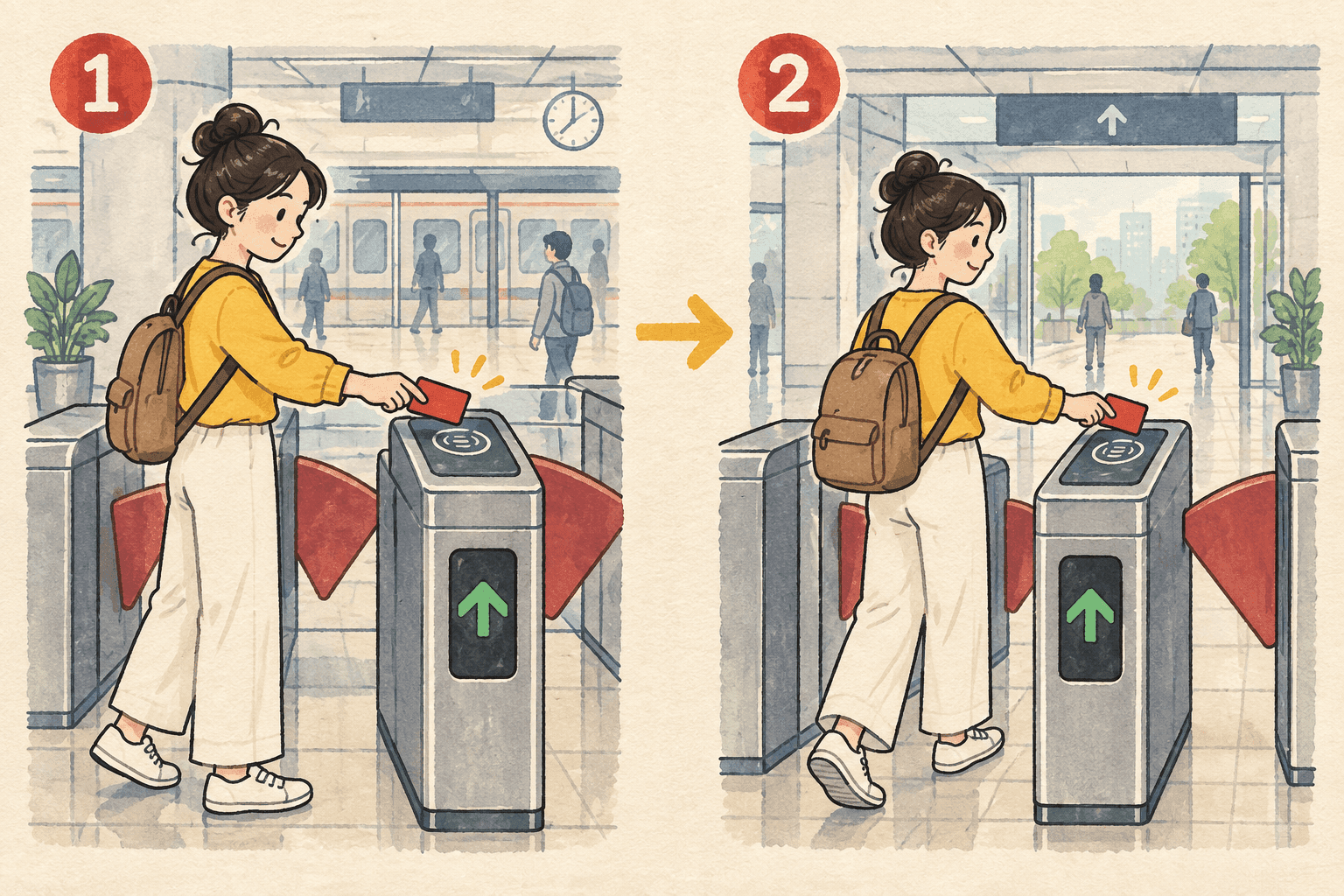
In Guangzhou and Shenzhen, you may already have what you need. Both networks support overseas-issued contactless Visa, Mastercard, American Express and JCB cards at gates displaying the relevant logos. Shenzhen’s service began its network-wide trial in June 2026; look for a marked gate. This does not establish card acceptance on buses, intercity trains or other cities’ metros.
- 1
Pick one way to enter and leave
With a supported card, tap the marked reader and wait for the gate to open. Use the same physical card again at the exit. If you use a supported mobile wallet, keep the same card on the same device throughout; do not enter with a phone and exit with the plastic card. Each fare-paying passenger needs their own valid ticket or credential.
- 2
Or activate the city’s metro QR code
In Alipay, open Transport, select your city, choose Metro and complete the displayed service, identity and payment authorisations. In Shenzhen, the Shenzhen Metro mini program in WeChat also supports linked overseas cards. Open the live metro code to scan at entry and exit; the shop payment code is a different screen. If activation fails, ask the station service centre about a single-journey ticket.
Alipay- Transport / 出行
- Choose the city
- Metro / 地铁
- Activate and open the code
- 3
Follow the line and its direction
After security and the gate, match the platform’s direction with your route. At a transfer, follow the next line’s signs. Check the destination exit before leaving the paid area. Keep a single-journey ticket until the exit and follow the gate’s tap or insert markings.
04
Bus — confirm the direction and how to pay.
- 1
Find the correct side of the road
Search the destination in your map, choose a bus route and check its direction, stop name and walking route. The stop with the same name across the road may serve the opposite direction. Read the route number on the arriving vehicle.
- 2
Open a bus code, or prepare exact change
In Alipay Transport, select the city and Bus, then activate the available service. Check that your payment method is accepted before boarding. Ordinary Guangzhou buses use front-door boarding and rear-door exit; pay at boarding as instructed. Cash is a useful fallback there, but drivers do not provide change. Other routes may collect fares differently, so follow their signs or the driver’s instructions.
- 3
Watch for your stop
Keep the destination stop visible on your phone and follow announcements. Use a stop-request button where provided. If the bus has instructions to scan when getting off, follow them with the same credential; do not assume every Guangdong bus uses the same payment pattern.
05
High-speed rail — book the exact stations.
A city name is not enough. Guangzhou South (广州南), Guangzhou East (广州东) and Guangzhou Baiyun (广州白云) are different stations; so are Shenzhen North (深圳北), Shenzhen (深圳) and Futian (福田). Check the station-to-hotel trip before buying.
- 1
Register and verify in Railway 12306
Use the official app’s English option or the English website. The English registration page accepts foreign passports and asks for an email address; it does not require a mainland mobile number on that form. Enter your name and document details as instructed, activate the account and follow the passport-verification prompts. Online verification is available; if it does not complete, bring your original passport to a staffed railway ticket counter.
- 2
Buy a confirmed ticket for each passenger
Choose the date, exact departure and arrival stations, train and seat class. Add each traveller with their own document details, check the total, then pay using an offered method. Check the completed order for the passenger, stations, departure time and ticket status. A waitlist request or unpaid reservation is not a confirmed ticket.
- 3
Travel with the document used to book
For a first visit to a large station, we suggest arriving 45–60 minutes before departure, and earlier if you need counter help or it is a holiday. This is a planning allowance, not an official minimum. Allow for security and finding the boarding gate. Carry the original passport used for the ticket; ask staff for the document-check lane if an automatic reader cannot read it. Follow the departure board and boarding deadline, then your carriage and seat. Keep the passport ready at the destination exit.
06
Intercity and “light rail” — check the service.
You may hear a regional train called 城轨 or 轻轨. Those names alone do not tell you which ticket or app to use. A rail line crossing a city boundary may also still be part of a metro journey.
Guangdong Intercity services such as the Guangzhao and Guanghui lines have separate railway and operator ticketing arrangements. The Guangzhou Metro app’s intercity code requires its own activation and identity checks; an ordinary metro code or unregistered transport card is not enough. For a first trip with a foreign passport, check for a ticket on 12306 or ask the staffed station counter. If you prefer the operator’s code, check its accepted documents before relying on it.
- 1
Check the stations and today’s departures
Find the exact intercity station and operator. Compare the whole trip with high-speed rail and metro. For the Guangzhou Metro-operated network, check its Intercity / 城际 section and station departure boards; use 12306 for services sold there.
- 2
Use the gate for your ticket
Show staff the booking or code if you are unsure which gate accepts it. Keep the same ticketing method through the journey. The Guangzhou Metro-operated intercity network includes services without reserved seats and with different stopping patterns. Confirm that the approaching train stops at your station. Elsewhere, follow the train and seat conditions on the ticket; do not assume every train called intercity lets you board any departure.
07
DiDi — agree on the place, then check the car.
Look for DiDi China: Ride Hailing, called DiDi–Greater China in older guides. The provider supports overseas-number login, English, international cards and translated in-app messages. You can also open DiDi through Alipay. Before relying on it, check that your number receives the login message and your payment method is available.
- 1
Set up the account and destination
Choose your phone’s country code, receive the login code and add or authorise an offered payment method. Follow any identity prompts shown for your account. Enter the destination, then check the Chinese name, branch and address before proceeding.
- 2
Confirm a place where the car can stop
Check the pickup point against the entrance, road side and floor where you are standing. Large stations and malls may direct booked cars to a designated area. Select a suitable vehicle and check the estimate, capacity, luggage needs and any stated extras before requesting it. The nearest pin on the map may not be an accessible pickup point.
- 3
Match the plate and finish in the app
Wait at the agreed point. Use the order’s chat, including its translation feature, to clarify your location. Match the displayed vehicle and number plate before getting in, and confirm any verification digits shown by the app. At the end, check the completed trip and payment status. For a failed charge, use the order’s help options before paying a second time.
08
Shared bikes — check the return point first.
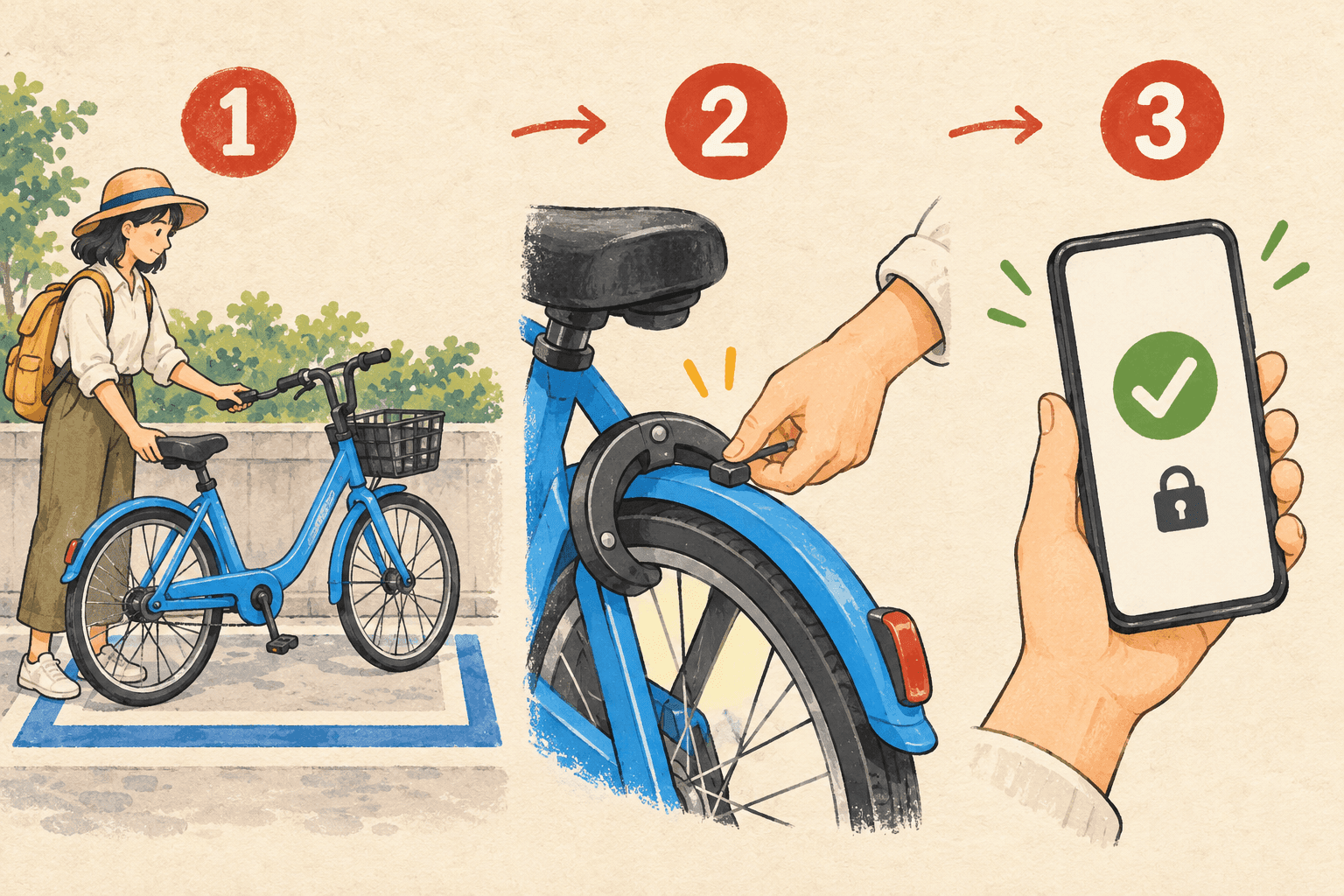
Choose a pedal bicycle for a short ride you feel comfortable making in local traffic. Leave it for another day if you have luggage, heavy rain, intense heat or no suitable cycling route. Shared e-bikes have different rules and are not covered by these steps.
- 1
Open the matching service and verify
For Hellobike / 哈啰, try its Alipay mini program or app. Meituan bikes use Meituan; Qingju / 青桔 uses DiDi or Qingju. Follow the operator name on the bike, not its colour alone. Complete its registration, identity and payment checks. Some services offer a non-mainland document option; if passport or overseas-number verification is unavailable or pending, use another way to travel. A working Alipay wallet does not guarantee bike eligibility.
- 2
Check the bike and the ride terms
Before unlocking, inspect the brakes, tyres and saddle. In the operator’s app, check the price, service area and a permitted return location near your destination. Scan the bike’s QR code and wait for the lock to release and the rental to start. Do not buy a recurring pass just to get past an unfamiliar screen.
- 3
Park, lock and check the order
Return within the operator’s allowed parking area and follow the app’s exact lock, photo or end-ride instructions. A painted bay alone does not prove this operator accepts the spot. Wait until the order shows that the rental has ended and check the charge before walking away. If the timer is still running, use that order’s help/report option and retain the bike number and parking photo.
If something goes wrong
There’s a next step.
The metro let me in but will not let me out.
Use the original card, device or metro-code service you entered with. If it still fails, go to the station service centre with that credential. Explain where you entered and show the trip record if available. Switching to a new code can leave the first journey unresolved.
My passport verification or login code is stuck.
Check the document type, spelling, country code and access to the registered number or email. Use the official service’s support. For trains, a staffed ticket counter is the practical fallback; for city travel, consider a single ticket or cash where accepted. You do not need to solve every app before making the next trip.
The last train or bus has gone.
Check a car booking from your actual location and confirm the pickup area. A staffed taxi rank or help from your hotel may be useful if app setup fails. For a remote attraction, arrange the return before setting out; a map showing a road does not guarantee a driver will accept a ride.
Will this also cover Hong Kong and Macau crossings?
This guide covers travel within mainland Guangdong. Journeys to Hong Kong or Macau involve separate entry requirements and service-specific tickets. Do not treat a cross-border journey as an ordinary metro or local intercity ride.
Sources & checks
Sources checked on 12 September 2026. Account eligibility, device support and transport arrangements can change; check the relevant official guidance again before travelling.
- AMap Global · Official app listing
- Apple · Transit directions
- Guangzhou government · International contactless cards on the metro
- Shenzhen government · International-card gate trial, June 2026
- Guangzhou Metro · Tickets and entry/exit credentials
- Shenzhen government · Overseas-card metro QR and ticket services
- China government · Transport guidance for foreign visitors
- Guangzhou Transport Bureau · Bus passenger rules
- Guangzhou Transport Bureau · Bus boarding and fare collection
- China Railway 12306 · English registration
- China Railway 12306 · Foreign-passport verification
- China Railway 12306 · Ticketing and travel FAQ
- Guangzhou government · Intercity ticketing and identity checks
- Guangdong government · Intercity stopping patterns
- DiDi · China app, overseas numbers and bilingual messaging
- International Services Shanghai · Bike providers and app entry points
- Qingju · Identity verification for non-mainland users